Silent in the Record: The 2015 Abstract That Never Became a Paper

Among the 412 abstracts accepted for presentation at the 2015 Consortium's annual meeting, the overwhelming majority followed a predictable arc: poster session, exchange of business cards, manuscript submission within eighteen months, citation. One did not.
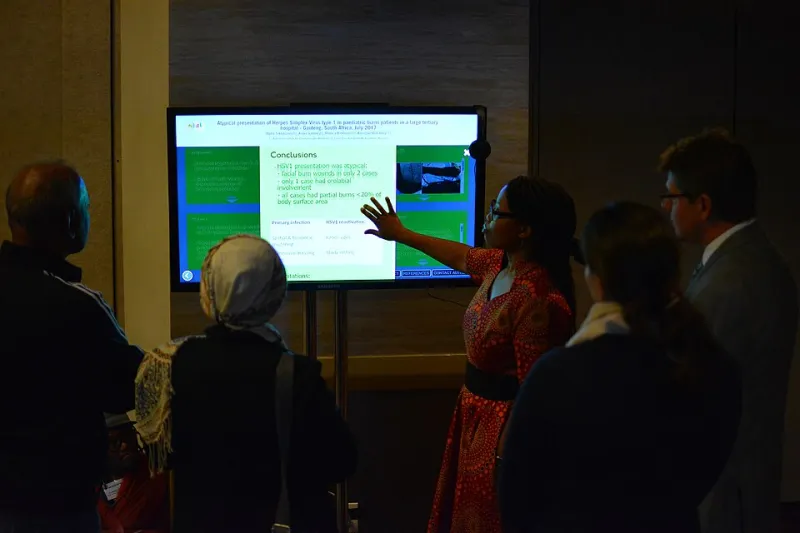
Abstract P-217, delivered on the second morning of the poster hall, reported preliminary findings on anti-Müllerian hormone variability across a multi-site cohort of 340 patients — a sample size that, at the time, would have made it among the larger such analyses in the literature. Attendees we interviewed for this archive recalled the poster drawing steady foot traffic. Two early-career investigators told us they had referenced it in grant applications. And then, quite simply, it stopped appearing.
Tracing a Ghost
Reconstructing the fate of an unpublished study is an exercise in archival patience. Correspondence with the presenting author, now in private practice in the Midwest, confirmed the basic outline: the multi-site collaboration frayed over data-sharing agreements, the lead site redirected its effort toward a separate endometriosis protocol, and the manuscript draft — reportedly complete as of 2017 — was never submitted.
"Nobody did anything wrong," the investigator told us. "The data were sound. The collaboration just dissolved. That's science."
Perhaps. But the consequences are not trivial. At least three subsequent published studies revisited substantially the same question, each with smaller samples. Whether P-217's findings would have replicated, moderated, or overturned those later results is unknowable — which is precisely the problem.
The File Drawer, Quantified
The phenomenon has a name and a literature. The file drawer problem — the accumulation of unpublished null or incomplete results — is estimated to distort effect sizes across biomedicine, and reproductive science is not exempt. A 2019 meta-analysis of fertility biomarker studies found evidence of publication bias consistent with small-study effects, a signature of missing negative findings.
What makes the 2015 initiative a useful case study is its scale. With hundreds of presented abstracts and a documented publication rate of roughly 61 percent at five years (per our own retrospective tracking), the consortium left behind a substantial shadow literature: work that was peer-reviewed at the abstract stage, seen by hundreds of specialists, and then lost to the citation record.
What the Archive Can Do
There is no retroactive remedy for P-217. But the case argues for institutional habits the field has since partially adopted: registered reports, mandated data-sharing timelines, and conference abstract DOIs that make the record of what was presented — and never followed up — searchable rather than anecdotal.
For clinicians, the lesson is more modest but no less important: an abstract is not evidence, and its absence from the journals is not evidence of failure. It is, more often than not, evidence of logistics. The archive preserves P-217's poster record here not as a cautionary tale about any individual, but as a reminder that the published literature is a curated sample — and that curation has a cost.