Reading the Floor Plan: What the 2015 Poster Hall's Architecture Revealed About a Field in Transition
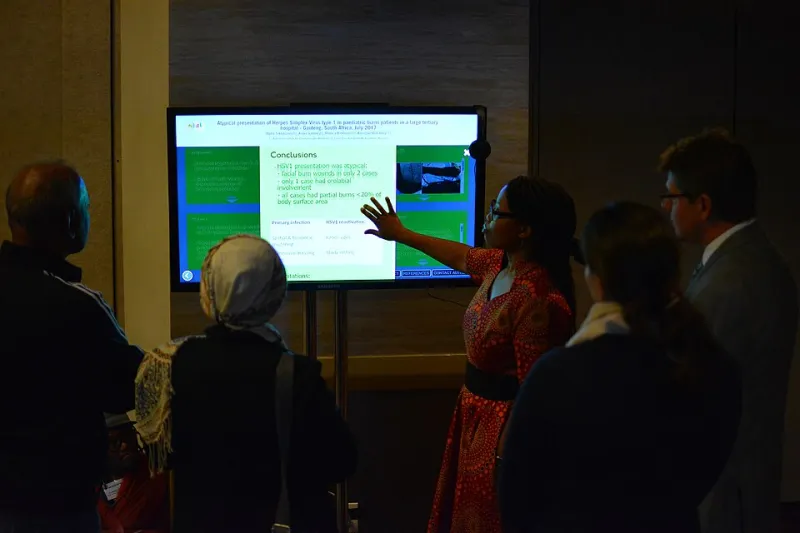
Photo: Christer Gr, CC BY-SA 4.0, via Wikimedia Commons
Conference plenaries capture the field's self-image. Poster halls capture its reality. In the case of the 2015 human reproduction initiative, the difference between the two is instructive — and reconstructing that hall, session by session, offers one of the more granular windows available into what reproductive science actually prioritized a decade ago.
The Source Material
The reconstruction draws on three archived artifacts: the printed abstract supplement distributed to registrants, a scanned exhibit-hall floor plan preserved in the consortium's organizational records, and the session numbering scheme used by organizers to sequence presentations across the three-day meeting. Cross-referencing these documents allows a reasonably faithful recreation of which topics occupied which aisles, and — more importantly — which topics were placed adjacent to one another.
Mapping the Themes
The abstract book organizes 340-plus posters into eleven numbered sessions. The distribution is telling. Session 1 through Session 4 — roughly forty percent of the total floor space — were devoted to conventional embryology and gamete assessment: oocyte morphology scoring, culture media comparisons, and time-lapse incubation metrics. These were the established pillars, and organizers gave them the aisles nearest the entrance, where foot traffic was heaviest.
Sessions 5 through 8 clustered around endometrial receptivity, implantation biomarkers, and recurrent pregnancy loss. This mid-hall block was noticeably more interdisciplinary than the front rows, drawing co-authors from immunology and genomics departments at institutions such as the University of Pennsylvania, Baylor College of Medicine, and the University of California, San Francisco.
The rear of the hall — Sessions 9 through 11 — housed the smallest and, in hindsight, the most consequential groupings: preimplantation genetic testing methodologies, mitochondrial replacement feasibility work, and early non-invasive embryo assessment. These sessions drew smaller crowds in 2015. Within five years, several of their central questions had migrated from the back aisle to the main stage of clinical practice.
What Adjacency Meant
Floor plans are rarely accidental. The placement of the mitochondrial function posters directly across from the PGT methodology block created an unplanned cross-pollination that multiple attendees later described in retrospective correspondence. A handful of collaborations appearing in the 2016–2017 literature trace their first conversations to that intersection of aisles — a reminder that spatial design shapes intellectual exchange in ways abstract books cannot record.
The Quiet Forecasters
Which sessions foreshadowed clinical shifts? Three stand out. First, the non-invasive embryo assessment posters of Session 11, which anticipated the culture-media metabolomics and cell-free DNA work that would mature later in the decade. Second, the endometrial receptivity cluster, whose transcriptomic sampling approaches presaged today's personalized embryo transfer protocols. Third, a modest group of six posters on cryopreservation logistics — vitrification workflow, warming protocols, and the then-nascent practice of electively freezing all embryos — a topic that would reshape American IVF practice patterns well before the decade closed.
A Snapshot Worth Keeping
Reconstructing a poster hall is an exercise in humility. The front-of-hall topics, given pride of place in 2015, generated durable but incremental contributions. The back rows, nearly overlooked at the time, supplied the conceptual groundwork for much of the clinical conversation that followed. For historians of reproductive medicine, the lesson is straightforward: to understand where a field was heading, do not read the program's opening pages. Read the floor plan's margins.