The Class of 2015: Following the Early-Career Investigators Who Redefined Reproductive Science

Photo: NASA / Johns Hopkins University Applied Physics Laboratory / Southwest Research Institute, Public domain, via Wikimedia Commons
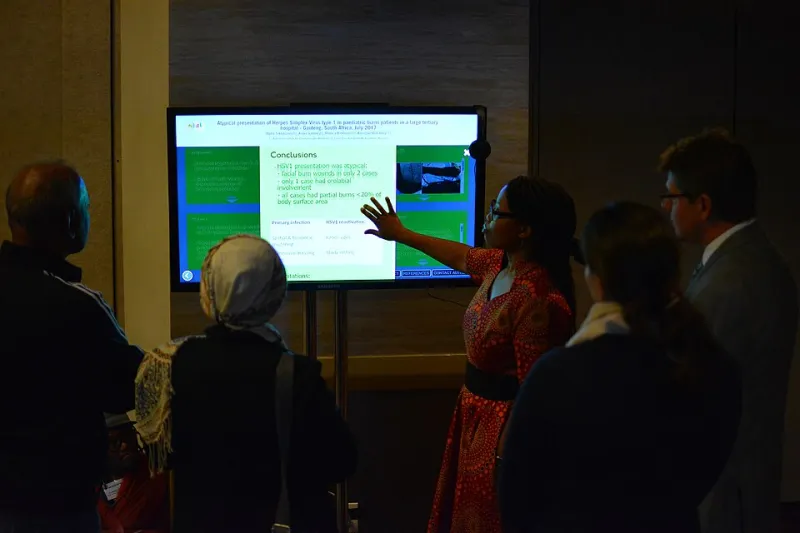
Every consortium keeps its institutional memory in senior names. But the truest measure of the 2015 human reproduction initiative may be the cohort nobody programmed keynote talks for: the trainees. Of the roughly 340 abstracts presented across the meeting's poster sessions, more than half carried first authors who were, at the time, graduate students or postdoctoral fellows. Ten years on, their career arcs form a longitudinal dataset of their own.
Assembling the Cohort
This retrospective drew on publication databases, institutional appointment records, and — where possible — direct interviews with eleven former trainee-presenters, conducted between late 2024 and early 2025. The cohort was deliberately unselected: respondents ranged from clinician-scientists to industry executives to a former federal science advisor. The goal was not to celebrate outliers but to map the distribution.
The Academic Track
Approximately half of the traced first authors remained in academic reproductive medicine. Several now direct laboratories of their own — at centers including the University of Michigan, Duke, and the University of Colorado — with research programs that, in multiple cases, grew directly out of their 2015 poster topics. One former postdoc, who presented on endometrial transcriptomics in a rear-aisle session, now leads an implantation biology lab whose work underpins two active clinical trials. She credits the meeting's mentorship pairing program: "The senior investigator assigned to my poster became my postdoc advisor within eight months. That hallway conversation was the hinge of my career."
The Industry and Biotech Path
A second cluster, roughly a quarter of the cohort, moved into the commercial sector — a pattern that surprised no one who attended the 2015 career panel, which featured representatives from Boston-area and Bay Area fertility technology firms. Former trainees from the non-invasive assessment and cryopreservation sessions disproportionately landed in this group, several now holding senior scientific roles at companies developing embryo imaging and genetic screening platforms. Their migration marked a broader shift: for the first time, the fertility biotech sector was recruiting directly from consortium meetings rather than waiting for published data.
The Policy Detour
The smallest but arguably most visible contingent entered science policy. One 2015 trainee-presenter subsequently completed a AAAS fellowship and spent four years as a staff scientist advising congressional committees on reproductive health research funding. Another joined a national bioethics commission convened to weigh emerging embryo-model guidelines. Their presence at the table a decade later reflects a deliberate consortium choice — the 2015 meeting included, unusually for its time, a policy-relevant session on research oversight that several trainees cite as formative.
What the Pipeline Data Suggest
Aggregated across the cohort, three patterns recur. First, serendipitous in-person encounters — mentor pairings, poster-adjacent conversations, career-panel follow-ups — appear in nearly every career narrative as inflection points. Second, trainees who presented in the smaller, forward-looking sessions were more likely to change subfields, following their topics as those topics matured clinically. Third, the consortium's willingness to fund trainee travel — modest grants covering flights and hotel rooms for first authors — measurably widened the geographic diversity of the cohort, pulling in investigators from midwestern and southern institutions that smaller meetings often overlooked.
A Decade's Lesson
Conferences are commonly evaluated by their published proceedings. The 2015 initiative suggests a different metric: the trajectory of the people in the room. A single meeting year, it turns out, can redirect an entire field's talent pipeline — one hallway conversation, one mentor pairing, one rear-aisle poster at a time. The archive's task now is to keep asking, at every subsequent milestone, the same question: where are they now, and who is standing where they stood?