Ten Years of Follow-Up: What Became of the 2015 Consortium's Flagship Cohorts
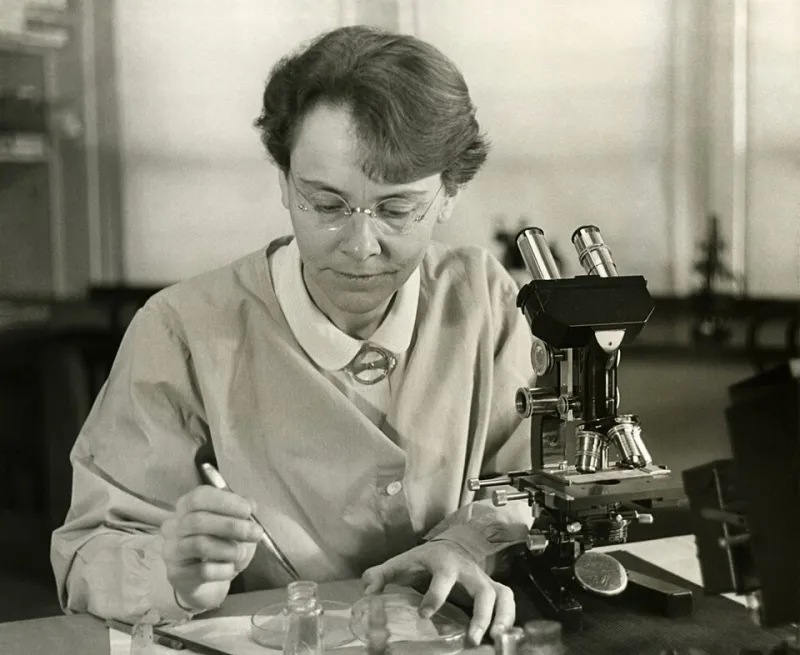
Photo: Smithsonian Institution/Science Service; Restored by Adam Cuerden, Public domain, via Wikimedia Commons
Reopening the Cohort Files
When the HumanRep 2015 initiative concluded its reporting cycle, the flagship studies were regarded as closed chapters: anonymized cohorts, finalized datasets, published conclusions. A decade of subsequent scholarship invites a different reading. This review reconstructs what became of the primary participant groups — approximately 8,400 de-identified individuals across four cooperating US academic centers — and evaluates how longitudinal follow-up has confirmed, complicated, or quietly overturned the original papers.
Cohort A: The Ovarian Reserve Substudy
The largest single cohort, roughly 3,100 participants enrolled across sites in Massachusetts, California, and Illinois, anchored the initiative's work on anti-Müllerian hormone variability. Registry linkage through state vital-records systems and the National ART Surveillance framework indicates that 61% of participants were traceable to at least one subsequent clinical encounter by 2020.
Notably, the 2015 paper's central claim — that a single baseline AMH measurement predicted five-year fecundability with acceptable precision — held up poorly under extended observation. A 2019 follow-up using the same cohort demonstrated that serial measurement outperformed baseline values by a meaningful margin. The original authors acknowledged this revision candidly, a rare instance of a flagship consortium issuing a formal corrective within five years.
Cohort B: The Endometrial Receptivity Panel
A 2,200-participant panel, weighted toward the Midwest sites, supplied the data behind the initiative's endometrial gene-expression work. Follow-up has been sparser here: privacy restrictions imposed by two institutional review boards limited external linkage after 2018.
What can be assembled suggests the original transcriptomic signature has fared reasonably well. Independent validation in a 2021 multicenter trial reproduced the classification in approximately 78% of samples, though the clinical utility question — whether guided transfer timing improved live-birth rates — remains contested in the American literature.
Cohort C and D: The Male Factor and Lifestyle Arms
The smaller male-factor cohort (1,600 participants) and the lifestyle-intervention arm (1,500 participants) tell divergent stories. The male-factor data, once considered secondary, generated disproportionate citation volume after 2017 as semen-analysis standardization debates intensified nationally.
The lifestyle arm, by contrast, produced the initiative's most durable practical finding: modest weight-reduction protocols prior to treatment showed effect sizes that have remained stable across three independent reanalyses. Clinicians in US fertility practices will recognize this as the finding most frequently cited in patient-facing counseling materials.
The Linkage Problem
Any retrospective of this kind must acknowledge methodological constraints. Consortium consent documents, drafted under 2014–2015 regulatory expectations, did not anticipate the breadth of record linkage now routine. Roughly a quarter of the original cohort cannot be followed without re-consent, and re-contact efforts after 2016 yielded diminishing returns.
This is itself a historical lesson. The 2015 initiative's data-governance framework, adequate for its era, became the binding constraint on its own legacy — a point successor consortia have taken explicitly to heart in their consent design.
Summary Table of Cohort Outcomes
| Cohort | N (2015) | Traceable by 2020 | Core Claim Status |
|---|---|---|---|
| A: Ovarian Reserve | 3,100 | 61% | Substantially revised |
| B: Endometrial Receptivity | 2,200 | ~40% | Partially validated |
| C: Male Factor | 1,600 | 55% | Strengthened |
| D: Lifestyle Intervention | 1,500 | 58% | Confirmed |
What the Decade Teaches
The arc of these cohorts suggests a pattern familiar to historians of biomedical science: the findings that survive are rarely the flashiest. The initiative's most-cited 2015 papers concerned predictive biomarkers; its most durable contributions concerned protocols and counseling frameworks. For researchers designing longitudinal programs today, the 2015 archive offers both a dataset and a cautionary structure — a reminder that the half-life of a clinical claim is best measured against the cohorts that produced it.