Unsent, Unfiled, Unforgotten: The Private Letters That Shaped the 2015 Initiative's Public Science
What the Appendix Left Out
Every consortium publishes an appendix. Few researchers ever read one. Yet the appendices of the 2015 human reproduction initiative—its protocol amendments, glossaries, and acknowledgments—represent only the final draft of a conversation that unfolded for nearly three years in a far messier medium: the private correspondence between principal investigators.
The HumanRep 2015 Archive has spent the past several months reviewing a collection of that correspondence, assembled from institutional records requests, donated email archives, and, in a handful of cases, literal shoeboxes of handwritten notes. What emerges is a portrait of collaborative science that no final report can capture.
The Medium Was the Message
The correspondence divides, roughly, into three strata. The earliest, from late 2014 into early 2015, is dominated by formal memoranda—typed, cc'd to administrators, careful in their hedging. By mid-2015, as trust among the five coordinating laboratories deepened, the register shifts. Emails grow shorter, blunter, occasionally funny. One exchange between the initiative's two senior reproductive endocrinologists runs to forty-one messages over a single weekend, debating whether a sample-cryopreservation threshold should sit at −80°C or −196°C. The published protocol says only: "consensus was reached on vapor-phase storage."
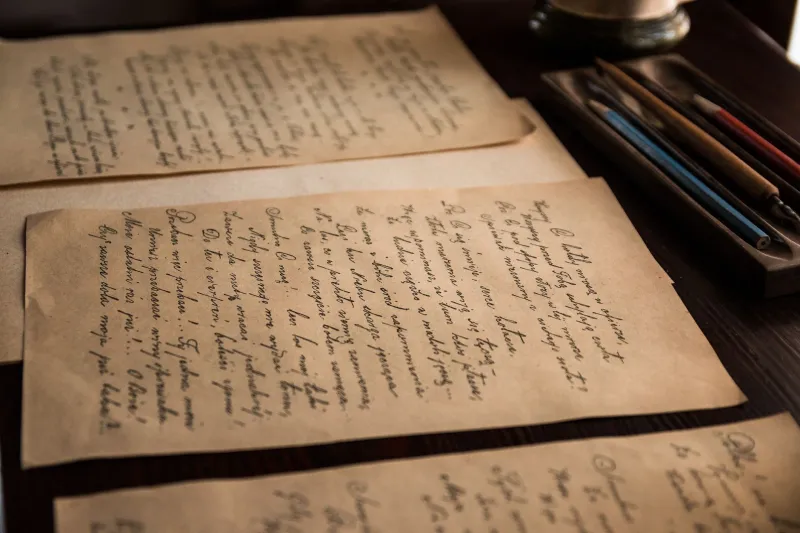
The handwritten notes are the most revealing. Scrawled on conference programs, hotel stationery from the initiative's Baltimore planning meeting, and at least one Denny's placemat, they record the arguments PIs were unwilling to commit to email. One note, unsigned but identifiable by handwriting, reads simply: "If we concede this endpoint, we concede the whole premise. Call me."
Disagreement as Method
It is tempting to read this material as gossip. We would argue it is something closer to method. The initiative's flagship protocols—later cited in hundreds of follow-up studies—were not produced by harmonized minds but by structured conflict. The correspondence shows PIs routinely drafting competing protocol language and circulating both versions to junior investigators for comment, a practice one participant described in a 2016 oral history as "making the postdocs the tiebreaker."
This informal adversarial process explains several decisions that have puzzled retrospective reviewers. Why did the initiative abandon its original single-endpoint design? The published rationale cites statistical power. The letters reveal a deeper worry, voiced by the Michigan site lead: that a single endpoint would force the consortium's smaller centers into permanent subsidiary roles.
The Ethics of Reading Other People's Mail
A review of this kind obligates us to acknowledge its own complications. Much of this correspondence was never intended for publication. We have elected to quote sparingly, to anonymize where authorship is uncertain, and to omit material bearing on individual personnel matters entirely. The goal is not exposure but historiography: an account of how consensus is manufactured, not a ledger of grievances.
Still, the archive raises questions the field has not fully settled. Should consortium correspondence be preserved by default? Destroyed on schedule? The 2015 initiative had no policy on the matter, and the uneven survival of its records—rich for some sites, nearly empty for others—reflects that silence.
Why It Matters a Decade Later
For early-career researchers trained on polished final reports, the correspondence offers a corrective. Science, even well-funded, well-coordinated science, is negotiated in the margins: in delayed replies, in drafts marked "v7_FINAL_final," in phone calls that resolve in an afternoon what memos could not resolve in a month. The 2015 initiative's protocols endured not because its investigators agreed, but because they disagreed on the record—mostly the off-the-record record—and kept at it until the disagreement produced something usable.
That, more than any single figure or finding, may be the initiative's most durable contribution.