Between the Rounds: How Fertility Nurses Quietly Rewrote the 2015 Initiative's Protocols

The 2015 Initiative's flagship publications list hundreds of investigators, statisticians, and steering committee members. What those author lists rarely capture is the workforce that actually implemented the protocols: the fertility nurses, IVF coordinators, and clinic staff across participating US centers who translated committee language into daily practice. A decade later, the materials preserved in the HumanRep 2015 Archive—training binders, faxed memoranda, and annotated procedure sheets—invite a closer reading of whose labor the record acknowledged, and whose it absorbed without citation.
The Binders That Traveled Farther Than the Papers
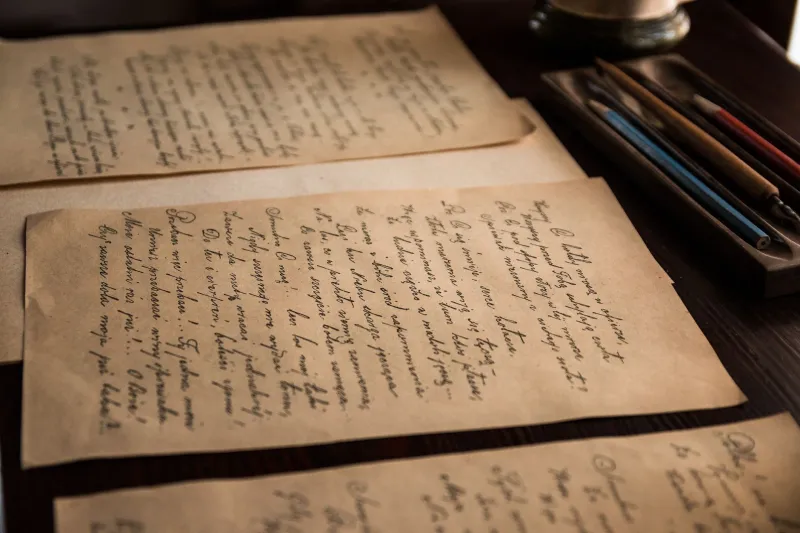
Participating clinics received standardized training binders in late 2014 and early 2015, prepared by the consortium's coordinating center. In principle, these documents were static: a fixed sequence of consent conversations, monitoring schedules, and specimen-handling instructions. In practice, the copies that survive are anything but static. Marginalia in several archived binders from Midwestern and Southeastern US clinics show nurses flagging impracticalities—monitoring windows that collided with clinic staffing realities, consent language that patients repeatedly misunderstood, specimen labeling schemes that broke down at busy morning intake.
These annotations matter because the consortium's own change logs confirm that many protocol amendments adopted during 2015 originated not in steering committee deliberations but in what the coordinating office internally called "site feedback." The feedback, almost without exception, was authored by nurses. Few of those names appear anywhere in the eventual publications.
Bedside Observation as Uncredited Data
The most consequential example documented in the archive concerns embryo transfer scheduling. Correspondence from three clinics, preserved in the initiative's site-visit files, describes a pattern nurses had noticed across hundreds of patient encounters: patients arriving for transfers were frequently unclear about which medications to continue, producing measurable anxiety and, in some cases, protocol deviations. Nurses at these sites improvised a standardized pre-transfer teaching script, complete with a one-page visual aid.
Within months, a version of that script circulated through the coordinating center and was incorporated into revised patient-facing materials used across the consortium. The published outcomes papers described "enhanced standardized patient education" as a protocol feature. Nowhere was the origin—three nurses comparing notes during a site visit—acknowledged.
This pattern repeats throughout the initiative's operational record. Adjustments to injection-teaching approaches, triage rules for ovarian hyperstimulation warning calls, and even the sequencing of monitoring blood draws all trace, in the archived paperwork, to frontline staff. Each was folded into the official record as a faceless protocol refinement.
A Labor Gap in the Scientific Record
Why does this matter to researchers and clinicians reading the archive today? First, because reproducibility depends on knowing how protocols were actually executed, not merely how they were written. The nurses' documentation—flow sheets, call logs, deviation reports—represents the truest record of implementation fidelity for the 2015 cohorts. Second, because the erasure of that labor distorts the sociology of the field. The initiative trained a generation of reproductive endocrinologists; it equally, and less visibly, trained a generation of IVF coordinators whose expertise shaped its success.
The consortium's publications were products of their era's conventions, in which technical execution was treated as administration rather than inquiry. But the archive suggests otherwise: the distinction between "collecting data" and "generating insight" collapses when one reads the nurses' correspondence carefully. The observation that changed patient education was a scientific observation. It simply wore scrubs.
Reading the Record Ten Years On
The HumanRep 2015 Archive holds these materials not to indict the initiative's leadership, whose publications remain landmark contributions, but to complete the record. Retrospective review is most valuable when it recovers the voices that convention omitted. The nurses' clipboards, binders, and faxes are not footnotes to the 2015 Initiative. They are the connective tissue between committee protocol and patient care—and the decade-later reader who wants to understand how the consortium actually functioned must read them as such.
Future oral history projects associated with this archive are expected to interview surviving clinic nursing staff from the participating sites. Until then, the paper trail stands as both evidence and epitaph: proof that the frontline labor was indispensable, and a reminder of how easily indispensable labor disappears from the published page.