The Cards Beneath the Podium: Unanswered Questions and the 2015 Plenary’s Long Echo

Photo: Unknown, CC BY-SA 4.0, via Wikimedia Commons
A Second Agenda in Handwriting
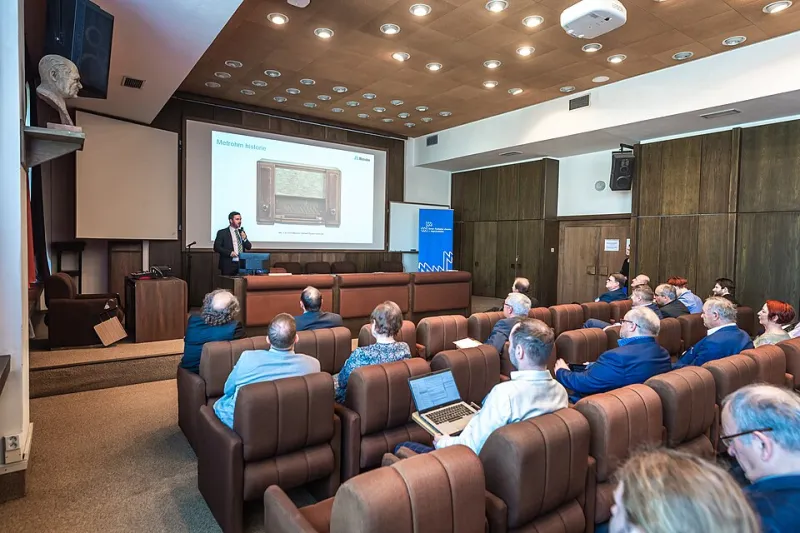
On 11 November 2026, the 2015 plenary is far enough away to be treated as a historical event rather than a recent meeting. The polished record of that gathering—the program book, the abstracts, the slide decks, the later papers—suggests a coherent research agenda. The archive tells a messier story. Among the materials preserved from the plenary are audience question cards, session-chair notes, and follow-up correspondence. Together they document a second agenda: the questions attendees brought into the hall and submitted in writing, often after the microphones had moved on.
This essay examines the cards that were collected but never answered from the podium. It does not treat them as a scandal or as evidence of bad faith. It treats them as a record of uncertainty at a particular moment in reproductive science. The useful question is not why every card went unanswered. It is which unanswered concerns later found their way into the consortium’s published work, and which remained trapped in the room.
What the Cards Contain
The surviving cards are unglamorous objects: lined index cards, hotel notepads, printed forms with handwritten additions. Many are Legible only in part. The archive has sorted them by session, though some were submitted without a session label and had to be matched to chair notes by timing and handwriting. The subjects are recognizable to anyone who follows reproductive medicine: ovarian reserve testing, embryo grading, progesterone support, endometriosis, male-factor diagnosis, preimplantation genetic testing, access to care, and the interpretation of long-term outcomes.
The cards are not a representative survey of attendee opinion. They are a residue. People write questions when they are invested, puzzled, or dissatisfied. The archive therefore reads them as a trace of the room’s intellectual pressure points rather than as a vote. Even so, the concentration of certain themes is striking. Questions about the clinical meaning of intermediate outcomes recur across sessions. So do questions about who would be followed, for how long, and by whom.
The Chairs’ Filter
Session-chair notes show that the plenary’s question-and-answer periods were governed by time, not by a formal triage system. Chairs marked cards with abbreviations: “time,” “defer,” “panel,” “after.” Some cards were passed to speakers after the session; others were left in the packet. Correspondence from the months after the meeting shows that a few attendees followed up directly with organizers. Those letters often restate the same concerns in more careful language.
The filter was practical. A session with three speakers and twenty minutes for discussion cannot absorb every question. But the filter also shaped the public record. Questions that could be answered within the session’s frame—methodological clarifications, definitions, requests for a number—tended to receive airtime. Questions that challenged the frame itself were more likely to be deferred. That is a familiar pattern in conference settings, and the 2015 archive preserves it clearly enough to study.
From Card to Protocol
A decade later, the comparison between unanswered cards and the consortium’s published record is uneven but informative. Several concerns raised on cards later appear as explicit limitations or secondary analyses. Questions about the durability of outcomes, for example, correspond to follow-up work that the consortium pursued in later years. Questions about the interpretation of embryo grading schemes appear in methodological commentary attached to subsequent publications. Questions about access and retention surfaced in the consortium’s internal discussions of cohort composition.
This does not mean that the cards caused those changes. Research agendas move for many reasons: funding, personnel, reviewer pressure, and new evidence. The archive can show resonance, not causation. Still, the overlaps matter. They suggest that the room’s unanswered questions were not idle. Some were early formulations of problems that eventually became legible to the consortium’s formal apparatus.
The Concerns That Stayed in the Room
Other cards have no clear echo in the published record. These tend to concern implementation rather than mechanism: how a recommendation would work in a clinic with limited resources, how patients would understand a consent form, how a finding would be explained to someone deciding whether to continue treatment. Such questions are difficult to convert into endpoints. They are also difficult to answer from a plenary podium. The archive does not show that they were ignored so much as that they lacked a route into the consortium’s publication pipeline.
The cards also preserve a recurring worry about what was not being measured. Attendees asked about emotional burden, financial strain, and the experience of care. These concerns appear in the correspondence and in chair notes, but they are thin in the formal record. A decade later, that asymmetry is easier to see than it was at the time. The 2015 plenary did not lack interest in these questions. It lacked a structure for carrying them forward.
What an Unanswered Question Measures
For researchers, the unread cards are a reminder that a conference is not only a dissemination event. It is also a sensing device. The questions people write reveal where the formal program and the audience’s concerns are misaligned. For historians of science, the cards are a useful corrective to the retrospective coherence of published proceedings. They show the agenda as it was experienced, not only as it was later narrated.
The archive does not propose that every unanswered card should have become a study. It proposes something more modest: that the residue of a meeting deserves to be read alongside its outputs. At the 2015 plenary, some uncertainties entered the record and some did not. The cards beneath the podium let us see the difference.