The Wells That Went Dark: Recovering the 2015 Initiative’s Failed Assays
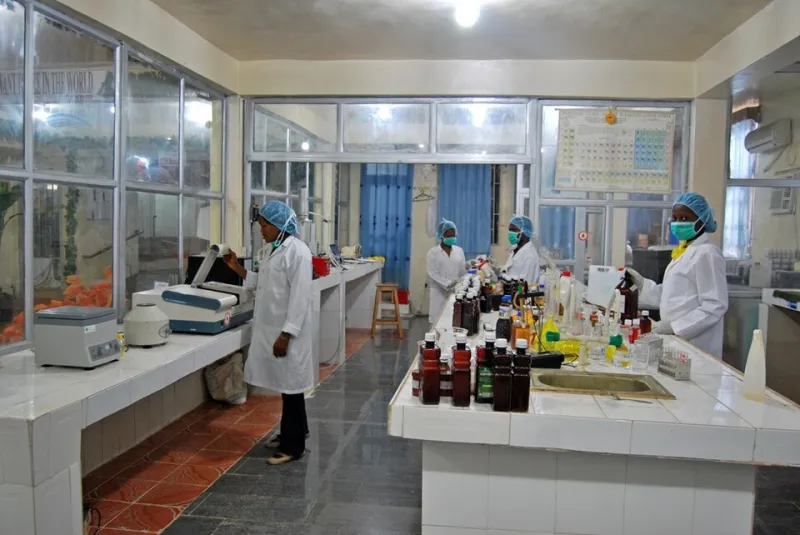
Photo: Bujojohn, CC BY-SA 4.0, via Wikimedia Commons
An Archive of What Did Not Work
When the 2015 human reproduction research initiative is discussed today, the conversation usually turns to its published outcomes: the cohort findings, the protocol refinements, the consensus statements that traveled from conference halls into clinic workflows. The archive held at HumanRep 2015, however, preserves a less familiar layer of evidence. Laboratory quality-control logs, instrument printouts, and internal memoranda document a series of assays that never reached the published record. Some failed outright. Others produced results that were technically valid but inconvenient, ambiguous, or difficult to reconcile with the initiative’s preferred analytical framework. Still others were abandoned for reasons that the formal record does not fully explain.
As of 2026, a decade after the initiative’s public materials were finalized, these negative and abandoned results deserve a retrospective reading. They are not merely technical footnotes. They constitute a parallel evidentiary record that bears on how U.S. fertility clinicians interpret the initiative’s published conclusions and how the field understands reproducibility in reproductive science.
The Paper Trail of Failure
The archive’s laboratory series is fragmentary but not silent. Quality-control logs from participating sites record repeated out-of-range values for several immunoassays used to characterize ovarian reserve markers. Instrument printouts show runs that were repeated three and four times before being flagged for manual review. Internal memoranda refer to “non-reportable” batches, “indeterminate” standard curves, and “assay drift” that could not be corrected within the initiative’s timeline.
One recurring pattern is the gap between the language of the logs and the language of the final publications. The logs describe instability; the published methods sections describe validated procedures. That gap is not necessarily evidence of misconduct. Laboratory work is iterative, and failed runs are ordinary. But the archive makes visible a distinction that the published record blurs: the difference between an assay that was optimized until it performed and an assay that was set aside because it did not.
The memoranda also reveal administrative decisions that shaped which failures became visible. A failed batch might be documented in a site’s internal log but omitted from the consortium’s central tracking system if the site deemed the failure “pre-analytical” or “non-substantive.” Those judgment calls were rarely revisited. Over time, the central record grew cleaner than the laboratory benches that produced it.
What the Discarded Wells Measured
The abandoned assays clustered around a few domains. Several concerned hormonal markers used to stratify participants by reproductive stage. Others involved semen analysis parameters that proved difficult to standardize across sites. A smaller set involved inflammatory markers that the initiative explored in exploratory analyses but did not pursue in its primary publications.
The technical reasons for abandonment were varied. In some cases, inter-site variability exceeded pre-specified thresholds. In others, the assay’s limit of detection was inadequate for the population under study. In a few instances, the archive contains instrument printouts that appear to show acceptable performance, yet the corresponding results do not appear in any published table or supplementary file. The memoranda suggest that these results were displaced by shifts in analytic priorities rather than by clear methodological failure.
For U.S. fertility clinicians, the distinction matters. A negative result that is reported as negative allows a reader to calibrate confidence. A negative result that is simply absent leaves a gap. The archive cannot recover every missing value, but it can document the shape of the gap. That documentation is itself a form of evidence.
Clinical Consequences and the Reproducibility Problem
In the decade since the initiative concluded, U.S. fertility practice has continued to rely on many of the measurement conventions that the 2015 consortium helped consolidate. Clinicians order ovarian reserve tests, interpret semen analyses, and compare outcomes across clinics using reference ranges that were shaped in part by the initiative’s published work. If the underlying assay development was more contingent than the publications suggest, then the reference ranges themselves carry a hidden uncertainty.
This is not an argument that the published findings are wrong. It is an argument that reproducibility is not only a matter of repeating successful experiments. It is also a matter of knowing which experiments failed and why. When failed assays disappear from the record, later researchers may repeat the same dead ends. Clinicians may overinterpret consistency that was achieved through selective reporting. And systematic reviews may treat the published literature as a complete sample when it is, in fact, a curated one.
The archive’s negative results also complicate the standard narrative of the initiative’s methodological rigor. Rigor is often inferred from the absence of reported problems. A more honest account would treat the handling of failed assays as part of the methodological record. The 2015 logs show a consortium grappling with ordinary laboratory uncertainty. That grappling is not a scandal. It is science. But it is science that the published record largely declined to show.
Retrieving the Negative in 2026
A decade on, the practical question is what to do with this material. The archive’s position is that negative and abandoned assays should be described, indexed, and made available to researchers and clinicians alongside the published outcomes. Full recovery may be impossible; some instrument printouts are faded, some electronic files are corrupted, and some memoranda refer to conversations that were never documented. But partial recovery is still valuable.
For U.S. fertility clinicians, the archive’s negative results offer a corrective to the tidy summaries that dominate continuing education and clinical guidance. They remind readers that measurement is a process, not a given. For researchers, they offer a map of dead ends that need not be explored again. For the historical record, they restore a measure of complexity to an initiative that is too often remembered only through its successes.
The wells that went dark in 2015 did not disappear. They were filed, logged, and eventually archived. Reading them now is not an exercise in second-guessing. It is an exercise in completing the record.